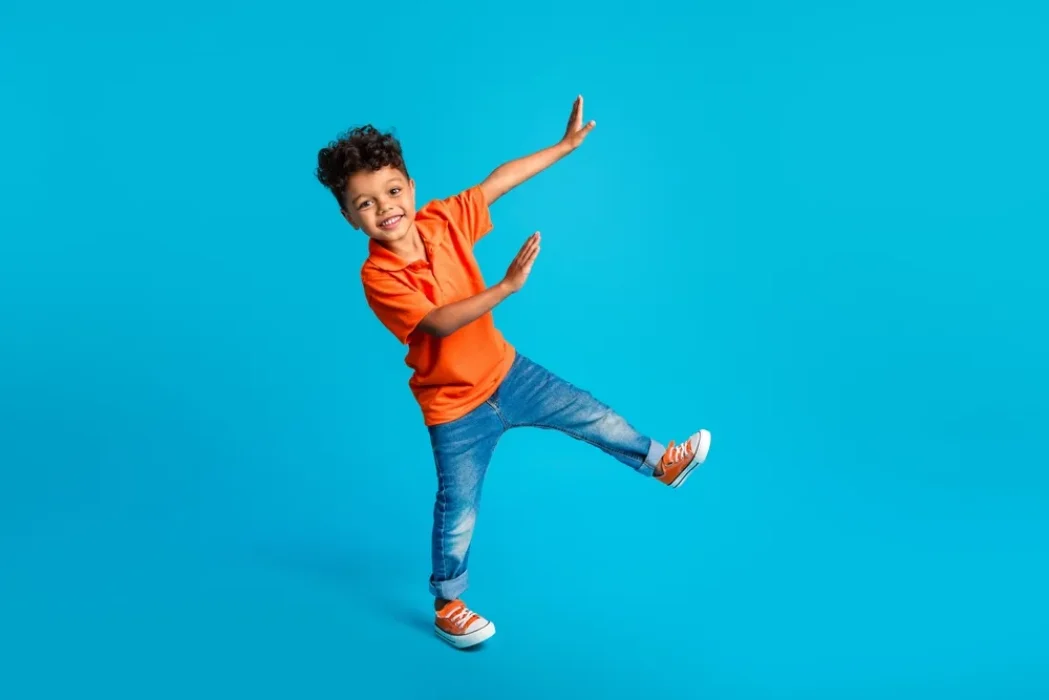
Every parent knows the “wiggles.” The couch climbing. The hallway sprinting. The endless jumping before dinner. The park-day energy that somehow gets bigger right when you are ready to go home.
But what if all that movement is not just extra energy?
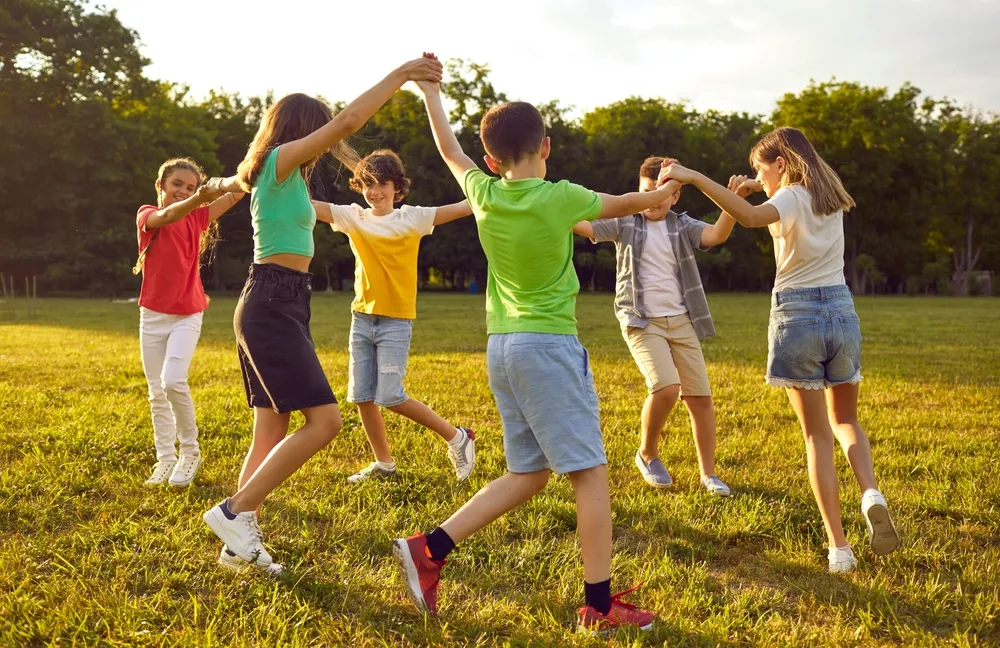
For young children, running, chasing, climbing, spinning, balancing, and laughing through active play are powerful ways of learning how to be with other people. Through movement, kids practice boundaries, teamwork, patience, confidence, emotional regulation, and social timing. They learn when to go, when to stop, when to share space, when to invite a friend in, and how to bounce back when a game does not go their way.
That is why active play and social skills are so closely connected. For toddlers, preschoolers, and early elementary children, play is not separate from development. It is often where development shows up first.
For Orange County families juggling school, screen time, busy schedules, playdates, and big feelings in little bodies, structured movement can be a game-changer. Whether it happens at a local park, in the backyard, at recess, or during a Fit First active birthday party, movement gives kids a real-life way to practice friendship.
Quick Answer: How Active Play Builds Social Skills
- Active play helps kids learn personal space, boundaries, and body control.
- Movement games teach turn-taking, patience, cooperation, and following rules.
- Running, jumping, and team games help children read facial expressions, body language, and group energy.
- Active play gives kids low-pressure chances to handle frustration, losing, waiting, and trying again.
- Structured movement activities can support confidence, teamwork, and playground social skills.
The Active Mind: Why Movement Isn’t Just Physical
Active play is often described as a way for kids to “burn off energy.” And yes, movement helps children use their energy in a healthy, positive way. But for children, especially younger kids, active play is also social practice.
Think about a simple game of freeze tag. A child has to listen for the rules, notice who is nearby, decide when to run, stop before bumping into someone, wait to be unfrozen, and manage the feeling of being “out.” That is a lot more than cardio.
The same thing happens during birthday parties, school recess, backyard games, and sunny weekend playdates. Kids are practicing communication without always using words. They are learning how to join a group, how to handle excitement, how to wait, how to recover from disappointment, and how to enjoy shared fun.
For OC parents, this matters because many everyday challenges show up during movement: rough play, difficulty sharing, a child who feels shy around groups, or a child who gets overwhelmed when games move too fast. Active play gives families a way to work on those skills in a fun, natural setting instead of turning every lesson into a lecture.
Redefining the “Wiggles” as Vital Communication
When a child runs, spins, climbs, or bounces, their body may be saying something before their words can catch up.
A child running ahead at the park may be testing independence: “Can I go a little farther and still feel safe?” A child hovering near a group may want to join but not know the right words. A child crashing into play may be excited but still learning how close is too close.
This does not mean every behavior should be allowed. Safety and respect still matter. But when parents see movement as communication, they can respond with guidance instead of only correction.
For example, instead of saying, “Stop running into everyone,” a parent might say, “Your body is excited. Let’s give your friends more space so everyone can keep playing.” Instead of “Don’t just stand there,” a parent might coach, “You can ask, ‘Can I play too?’ or ‘What team needs one more?’”
Parent Takeaway: Before stopping the wiggles, ask what they might be telling you. Is your child excited, unsure, overwhelmed, seeking connection, or testing independence? The answer helps you guide the behavior with more patience.
The Brain-Body Connection in Early Childhood
Young children learn through their bodies. They understand space by moving through it. They understand timing by starting, stopping, waiting, and reacting. They understand social rhythm by matching another child’s speed, noticing when a game changes, and adjusting their body around other kids.
In active play, children practice skills like:
- Waiting for a cue before running
- Matching another child’s pace
- Stopping when the rule changes
- Moving around others without bumping
- Calming down after excitement
These are not small things. A child who can pause during “red light, green light” is practicing self-control. A child who slows down so a younger friend can catch up is practicing empathy. A child who notices that a game is getting too rough is beginning to understand group awareness.
Coach’s Note: At Fit First, one of the biggest things coaches notice is that kids often show their social growth through movement first. A child may not say, “I am learning patience,” but you can see it when they wait for their relay turn, cheer for a teammate, or try again after missing a goal.
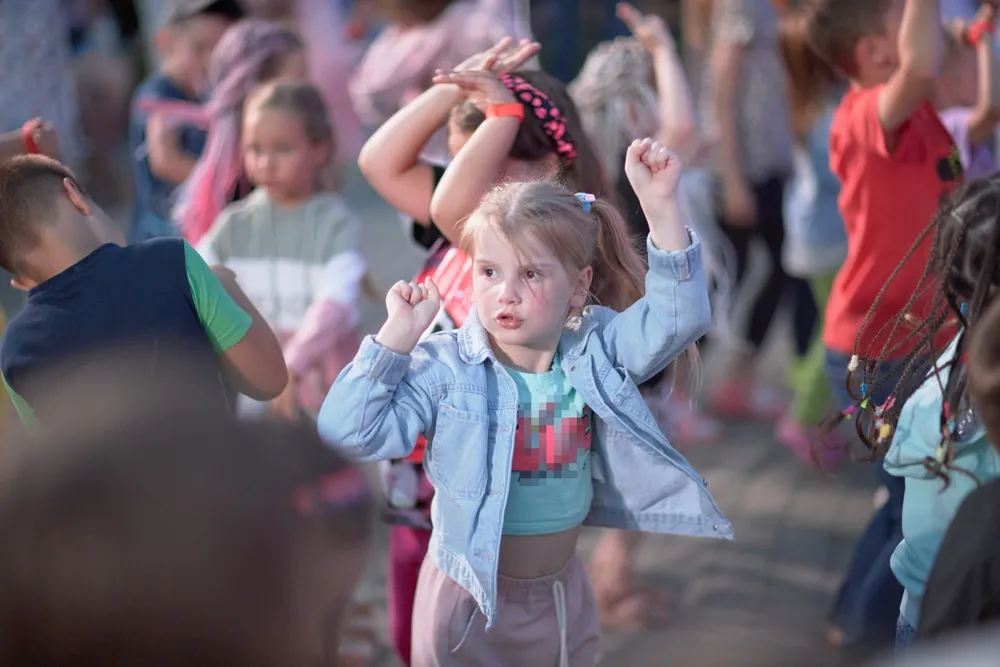
4 Surprising Ways Active Play Supercharges Social Skills
Social skills are not only taught through talking. Children often learn best while moving, laughing, reacting, and figuring things out in real time. A playground, park, or backyard game can become a real-life classroom for cooperation, confidence, and emotional resilience.
1. Navigating the Playground: Learning Spatial Awareness and Boundaries
Playgrounds are full of social lessons. Kids have to climb without crowding, run without crashing, wait near the slide, share space on the swings, and understand when another child wants room.
Games like tag, obstacle courses, relay races, and ball games teach children where their body is in relation to others. They begin to understand distance, speed, safety, and body control.
A child learns not to bump into others during a chase game. Another learns to give a friend room to climb. A child who tends to play too rough learns to stop before contact becomes uncomfortable. These are playground social skills, but they are also life skills.
Fit First-style activity idea: Set up a “space explorer” obstacle course using cones, chalk lines, hoops, or safe backyard objects. Kids move through the course while practicing “near,” “far,” “around,” “behind,” and “freeze.” Add a rule that everyone must leave “bubble space” around each player.
This works especially well for kids who need help with body awareness because it turns boundaries into a game instead of a constant correction.
2. Taking Turns and Rules: The First Lessons in Cooperation
Turn-taking can be hard for young children because waiting feels big. In active games, waiting becomes easier because the next turn is visible, exciting, and part of the fun.
A relay race teaches a child to wait for their teammate before running. Passing a ball teaches sharing and timing. Freeze-and-go games teach listening and self-control. Cheering for another child teaches that being part of the group matters even when it is not your turn.
These movement activities for kids are especially helpful for preschool and early elementary children because the rules are simple, short, and active. Instead of saying, “You need to cooperate,” the game gives them a reason to cooperate.
Try this at the park: Play “pass, move, cheer.” Children stand in a small circle. One child passes the ball, moves to a new spot, and says something encouraging like “Nice catch!” Keep the game going with quick turns. The goal is not perfect throwing. The goal is passing, waiting, moving, and supporting each other.
3. Reading the Room: How Non-Verbal Cues Are Learned on the Move
A lot of social communication happens without words. Kids learn from facial expressions, body language, speed, tone, and group energy.
During active play, these cues are easier to see. A friend who slows down may be tired. A child who steps back may need space. A game that gets louder and faster may be getting too rough. A child watching from the side may want to join but feel unsure.
When children play active games together, they get repeated chances to notice these signals. They learn when to slow down, when to invite someone in, when to change the game, and when to step back.
A child might notice, “My friend is not laughing anymore.” Another might realize, “The younger kids cannot keep up.” These are the early building blocks of empathy and peer awareness.
Parent coaching phrase: “Look at your friend’s face and body. Do they still look like they are having fun?”
That one sentence helps children pause, observe, and connect their actions to someone else’s experience.
4. Bouncing Back: Building Emotional Resilience Through Active Play
Active play gives children many small chances to practice resilience. They miss the goal. They lose a round. They fall safely and get back up. They wait longer than they want. They try a movement that feels hard at first.
These moments can feel minor to adults, but they are meaningful for children. A child who learns to miss a shot and try again is practicing perseverance. A child who loses a game without quitting is practicing emotional flexibility. A child who cheers for another team is learning confidence that does not depend on always winning.
This is where active play and child development connect in a very practical way. Children learn that mistakes are not the end of the game. They are part of the game.
Fit First uses movement-based activities to help kids experience challenges in a positive, encouraging environment. The goal is not to make every child the fastest or strongest. The goal is to help every child feel capable, included, and ready to try again.
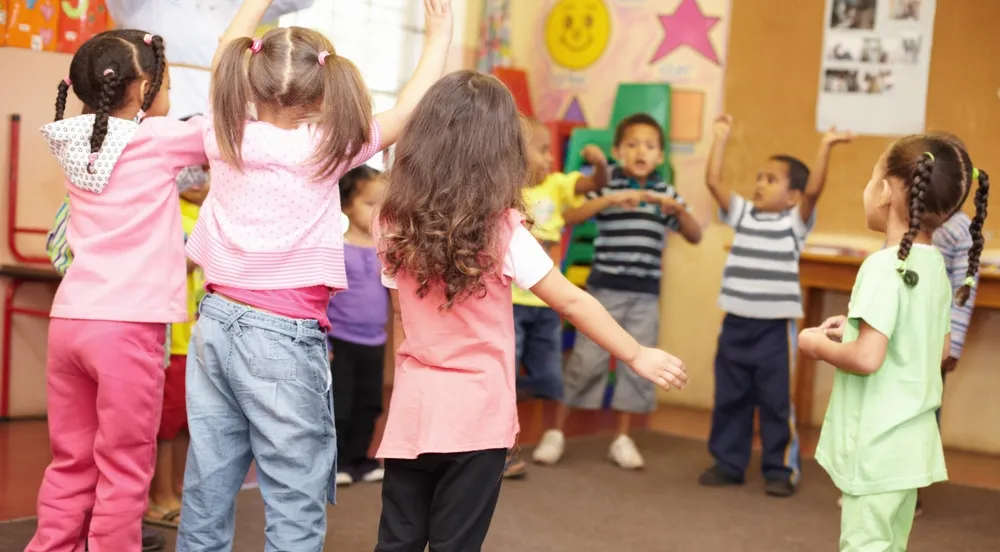
From Parallel Play to Team Players: A Developmental Timeline
Children do not all play socially in the same way at the same age. A toddler, a preschooler, and a 7-year-old may all enjoy active play, but their social expectations should look different.
Understanding the stages helps parents support growth without expecting too much too soon.
Toddlers and Kinetic Empathy (Ages 1-3)
Toddlers often play beside each other before they truly play together. They may copy movements, chase bubbles, roll balls, dance near peers, or run in the same direction without a shared plan.
That still counts.
At this age, social growth often looks like imitation, shared attention, and gentle body awareness. A toddler who copies another child’s jump is connecting. A toddler who rolls a ball back and forth for three turns is practicing early cooperation.
Parent guidance for toddler social skills should stay simple. Keep games short. Model gentle touch. Use clear phrases like “my turn,” “your turn,” “soft hands,” and “stop.” Celebrate small moments of shared play instead of expecting long group games.
Preschoolers and Collaborative Games (Ages 3-5)
Preschoolers begin to understand simple rules, shared goals, and group play. They can participate in follow-the-leader, team clean-up races, group obstacle courses, and simple partner games.
They may still struggle with winning, waiting, sharing, and changing rules. That is normal. Preschool social development is full of big feelings and quick recoveries.
Structured active play can help because it gives preschoolers clear expectations without removing the fun. A coach or parent can say, “First we crawl through the tunnel, then we high-five our teammate, then we run back.” The steps are simple, but the social practice is real.
The magic is in repetition. Every round gives the child another chance to listen, wait, move, cheer, and try again.
Early Elementary and Team Dynamics (Ages 6+)
By early elementary age, children can handle more complex team games, strategy, leadership roles, and basic conflict resolution. They can understand relay teams, capture-the-flag style games, partner drills, group fitness challenges, and problem-solving activities.
This is also the age when peer connection can become more important. Kids may compare themselves to others or worry about being left out. Active play can help them build confidence because it creates many different ways to contribute.
One child may be fast. Another may be a strong encourager. Another may be great at strategy. Another may help explain the rules. Teamwork games for kids allow leadership to show up in more than one way.
For sports readiness, school confidence, and peer connection, this stage is a great time to use movement as a bridge between fitness and friendship.
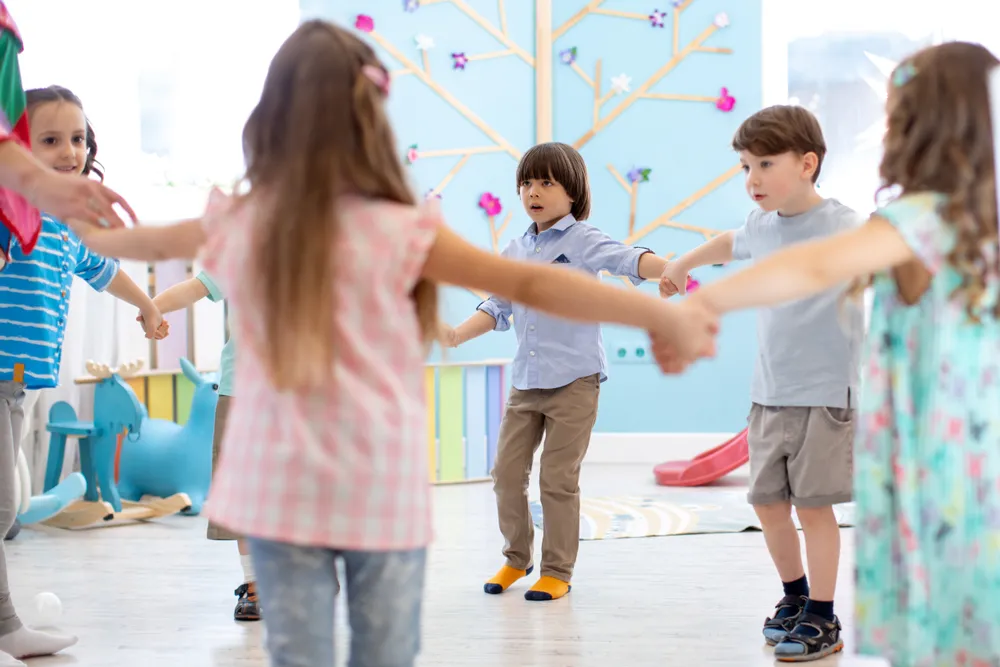
Fit First Favorites: Intentional Activities That Build Connection
The best active play activities are not always complicated. With a little intention, a simple park game or backyard challenge can support teamwork, communication, confidence, and inclusion.
High-Energy Games that Require Teamwork
Partner Relay
Best for ages 4+. Children complete a short relay in pairs, such as running to a cone and back or carrying a soft ball together. This builds cooperation, timing, and encouragement. A parent or coach can remind kids to match their partner’s speed. To make it inclusive, allow walking, shorter distances, or different movement choices like skipping, marching, or rolling a ball.
Team Treasure Hunt
Best for ages 3+. Kids search for safe objects, color cards, or picture clues as a team. This builds communication and shared problem-solving. The parent tip is to give every child a role: finder, clue holder, counter, or team cheerleader. For inclusive play, use visual clues and flexible movement options.
Balloon Balance Race
Best for ages 4+. Two children carry a balloon between them without using hands, or they balance it on a towel together. This builds patience, body awareness, and laughter. Keep the distance short so frustration stays low. For inclusive support, let children use hands lightly or move at their own pace.
Obstacle Course Builders
Best for ages 5+. Instead of adults designing the whole course, kids help create it. This builds leadership, negotiation, and creativity. A coach tip is to ask, “What is one challenge everyone can do safely?” To make it inclusive, include multiple difficulty levels.
Group Freeze Challenge
Best for ages 3+. Kids move to music or a signal, then freeze in a pose. This builds listening, impulse control, and group awareness. Parents can add themes like animals, superheroes, or ocean creatures. For children who need support, give a visual cue along with the verbal cue.
Pass-and-Move Ball Game
Best for ages 4+. Children pass a ball, move to a new spot, and invite the next player by name. This builds turn-taking, names, eye contact, and inclusion. A simple coach tip is to praise the invite: “Great job making sure everyone got a turn.”
Low-Structure Play: Letting Kids Create Their Own Social Rules
Not every game needs adult-designed rules. Low-structure play is where children invent, negotiate, test ideas, and solve problems. Adults still supervise for safety, but they do not need to control every moment.
Kids might build an imaginary obstacle course, create a backyard mission game, make up animal movement challenges, or design a team race together. One child may decide the couch cushion is a mountain. Another may turn cones into a lava path. Another may become the timekeeper.
This type of play builds leadership, creativity, negotiation, and confidence. Children learn how to explain ideas, adjust when others disagree, and create shared rules.
For parents, the key is to stay nearby without taking over. If the play is safe and respectful, let kids experience the small bumps of social problem-solving. That is where growth happens.
The Parent’s Playbook: How to Guide (Without Taking Over)
Parents naturally want to help. When a child is left out, frustrated, too rough, or unsure how to join, it is tempting to jump in right away. Sometimes that is exactly what is needed. Other times, kids benefit from a little space to practice.
The goal is not to ignore conflict. The goal is to guide without taking over every social moment.
Knowing When to Intervene vs. Letting Kids Work It Out
Parents should step in when safety is at risk, a child is being excluded repeatedly, rough play becomes harmful, a child is overwhelmed, or the same conflict keeps repeating.
In those moments, calm adult guidance helps children feel safe and teaches respectful boundaries.
But parents can wait and observe when kids are negotiating rules, mild frustration is manageable, a child is trying to join a game, the group is solving a small disagreement, or the play is energetic but still safe.
A short pause gives children a chance to use their own social tools. If they need help, parents can coach with simple scripts:
“Can you ask them what role you can play?”
“What’s one way to make the game fair?”
“Let’s check if everyone still wants to play this way.”
“How can we make room for one more friend?”
These phrases teach children what to say next instead of solving the whole problem for them.
Framing Post-Play Conversations for Social Growth
Some of the best learning happens after the game ends. A short conversation in the car, during snack, or while walking back from the park can help children connect movement experiences with social lessons.
Keep it light and specific. You might ask:
“What was the best teamwork moment?”
“Was there a time you had to wait or take turns?”
“How did you know your friend was having fun?”
“What did you do when the game got hard?”
“What would you try differently next time?”
These questions help children reflect without feeling criticized. Over time, they begin to notice their own growth: “I waited,” “I asked to join,” “I tried again,” or “I helped my friend.”
That is the real win.
FAQ Section
1. How does active play help social skills?
Active play helps children practice turn-taking, boundaries, teamwork, communication, and emotional regulation in real time. Games like tag, relays, obstacle courses, and ball play give kids natural chances to wait, share space, read social cues, and try again after challenges.
2. What are the best active games for kids who struggle with sharing?
Simple games with clear turns work best. Try partner relays, pass-and-move ball games, treasure hunts, freeze games, and obstacle courses where each child has a role. These activities make sharing feel active and fun instead of forced.
3. Can active play help shy children make friends?
Yes. Active play can give shy children an easier way to connect because they do not have to start with a long conversation. Running, copying movements, passing a ball, or joining a simple team game can create low-pressure social entry points.
4. How much active play do kids need each day?
Preschool-aged children should be active throughout the day, while children ages 6 to 17 should get at least 60 minutes of physical activity daily, according to CDC guidance. For families, the key is to build movement into normal routines through park play, backyard games, walking, dancing, and structured activities.
5. Are active birthday parties good for building teamwork?
Yes. Active birthday parties can help kids practice cooperation, cheering for others, taking turns, following rules, and including different personalities in the fun. A well-planned active birthday party keeps children moving while creating shared group experiences.
Conclusion: Moving Together, Growing Together
Active play is not just movement. It is a child’s training ground for friendship, confidence, boundaries, teamwork, and emotional resilience.
When kids run, jump, chase, climb, balance, freeze, cheer, and try again, they are learning how to be part of a group. They are practicing how to handle big feelings, how to read other children’s cues, how to share space, and how to keep going when something feels hard.
For SoCal families, this can happen in simple, joyful ways: backyard play, local park games, active birthday parties, playdates, school events, and structured youth fitness sessions.
Fit First supports Orange County families with fun, screen-free, movement-based experiences that help children build confidence while staying active. Whether your child needs more teamwork practice, a healthy outlet for real-life kid energy, or a birthday party that gets everyone moving, active play social skills can grow together.
Ready to help your child move, connect, and shine? Book a Fit First youth fitness session, active birthday party, or movement-based play experience in Orange County today.