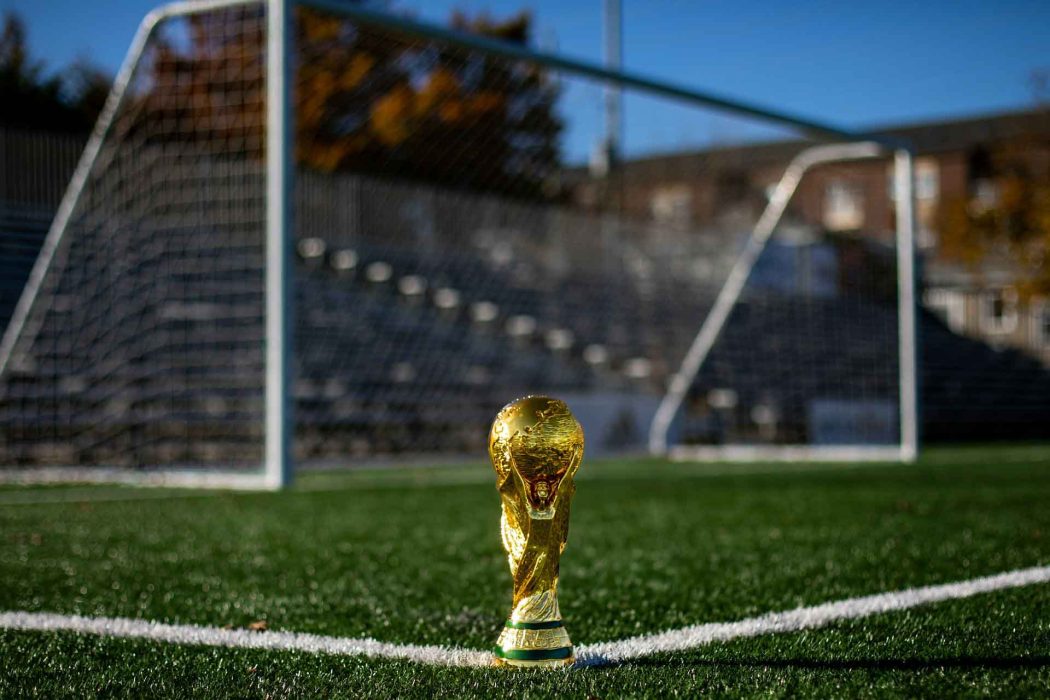
The USA World Cup 2026 is redefining the scale of international soccer.
For the first time in tournament history, 48 national teams are competing across North America in a competition spanning 104 matches and multiple countries. Millions of fans are traveling between host cities, billions are following the action from around the world, and a new generation of players is stepping onto soccer’s biggest stage.
From the electric atmosphere of Los Angeles and New York to the packed stadiums of Dallas, Miami, and Seattle, the tournament represents far more than a sporting event. It is a global showcase of preparation, discipline, resilience, and high performance.
While fans naturally focus on spectacular goals, dramatic saves, and championship predictions, another story unfolds behind the scenes. Every player participating in the USA World Cup 2026 has spent years developing habits that most people never see. The performances taking place in front of sold-out crowds are the visible result of thousands of invisible decisions made long before the tournament began.
For young athletes, students, and aspiring leaders, the tournament offers something valuable beyond entertainment. It provides a real-world case study of how elite performers build success over time.
Understanding how today’s superstars reached the top can reveal practical lessons that apply far beyond the soccer field.

Navigating the Field: The USA 2026 Host Cities Map
One of the most unique aspects of the USA World Cup 2026 is its geography.
Unlike previous tournaments hosted within a relatively compact region, players must adapt to enormous travel distances, multiple climate zones, and vastly different stadium environments throughout North America.
The West Coast: Technology, Pace, and Innovation
The western portion of the tournament includes some of the most advanced sporting venues in the world:
- Seattle – Lumen Field
- San Francisco Bay Area – Levi’s Stadium
- Los Angeles – SoFi Stadium
These cities represent modern sports infrastructure, but they also require athletes to manage travel demands and changing environmental conditions.
The Central Heartland Powerhouses
Further east, teams encounter another set of challenges:
- Kansas City – Arrowhead Stadium
- Dallas – AT&T Stadium
- Houston – NRG Stadium
High temperatures, humidity, and physically demanding match conditions can influence recovery strategies and player performance.
The East Coast Battlegrounds
The eastern host cities include:
- Atlanta
- Miami
- Boston
- Philadelphia
- New York/New Jersey – MetLife Stadium
Each location presents its own atmosphere, fan culture, weather patterns, and logistical considerations.
Why Adaptability Matters at the Highest Level
Imagine arriving after a long flight, adjusting to a different time zone, training in unfamiliar weather, and then competing against one of the world’s best teams.
This is the reality of international tournament soccer.
Elite players develop systems that allow them to perform consistently regardless of external circumstances. England captain Harry Kane, for example, is known for maintaining highly structured preparation routines throughout long tournaments. Similarly, Mohamed Salah has often spoken about the importance of consistency in training, nutrition, and recovery regardless of location or competition.
Sports scientists refer to this ability as environmental adaptability—the capacity to maintain performance despite changing conditions.
For young athletes, the lesson is simple: success often depends less on perfect circumstances and more on the ability to perform when circumstances are less than ideal
Decoding Superstars: How the World’s Best Became Successful
The Myth of Natural Talent
When spectators watch Kylian Mbappé sprint past defenders during the USA World Cup 2026, it is easy to attribute his success entirely to natural ability.
Certainly, Mbappé possesses exceptional physical gifts. However, focusing solely on his speed overlooks a crucial reality.
Former coaches who worked with Mbappé during his youth career consistently describe a player obsessed with repetition. Long before becoming a World Cup champion, he spent countless hours refining decision-making, finishing techniques, movement patterns, and game awareness.
His acceleration may be natural.
His timing is trained.
His composure is trained.
His finishing ability is trained.
The distinction matters because it challenges one of the most common misconceptions in youth sports: the belief that elite performers are simply born different.
In reality, talent creates opportunity. Deliberate practice determines outcomes.
The Invisible Hours Behind Elite Performance
Several years ago, former teammates described a recurring scene after training sessions involving Cristiano Ronaldo.
Practice would end.
Players would leave.
Coaches would finish their work.
Yet Ronaldo often remained.
Sometimes he worked on ball striking.
Sometimes footwork.
Sometimes strength training.
Often the drills themselves were surprisingly basic.
The key was repetition.
While spectators see the final result on match day, elite athletes understand that performance is built through ordinary actions repeated consistently over many years.
Sports psychologists often refer to this as compound improvement. Small daily gains accumulate and eventually create significant competitive advantages.
The principle applies equally to athletics, academics, and professional development.
Excellence rarely emerges from a single breakthrough moment.
More often, it develops through thousands of seemingly insignificant actions performed consistently over time.

How Kylian Mbappé Reached the USA World Cup 2026: Training Habits and Skills Young Athletes Can Learn
As fans watch Kylian Mbappé compete at the USA World Cup 2026, many see one of the fastest and most exciting players in modern soccer. His explosive speed, clinical finishing, and ability to change a game within seconds make him one of the most recognizable athletes in the world.
However, Mbappé’s journey to the USA World Cup 2026 was not built on talent alone.
Behind every goal and highlight reel is a training philosophy centered on discipline, repetition, and continuous improvement. For young athletes hoping to improve their own performance, studying Mbappé’s development offers valuable lessons that extend beyond soccer.
Early Development: Building Skills Before Fame
Kylian Mbappé began playing soccer at a young age in Bondy, a suburb of Paris. His father coached youth soccer, while his mother was a former athlete. Growing up in a sports-focused environment gave him access to quality coaching, but it was his commitment to training that separated him from many other talented players.
Coaches who worked with Mbappé during his youth career frequently noted his willingness to repeat technical drills over and over again. Instead of focusing solely on flashy moves, he spent hours improving fundamentals such as:
- First touch control
- Ball mastery
- Shooting accuracy
- Passing under pressure
- Movement without the ball
- Quick decision-making
These foundational skills eventually became the building blocks of his elite-level game.
The Training Habits Behind Mbappé’s Success
While many young players dream about scoring goals, Mbappé’s training focused on developing complete athletic performance.
Speed Training
Mbappé is famous for his acceleration, but speed is not developed through sprinting alone. His training has included:
- Explosive sprint drills
- Agility ladder exercises
- Direction-change training
- Plyometric workouts
- Lower-body strength development
These exercises help improve both acceleration and balance during high-speed movements.
Technical Repetition
Elite players often perform thousands of repetitions to make skills automatic under pressure.
Mbappé regularly trains:
- One-touch passing
- Finishing from different angles
- Weak-foot shooting
- Ball control at high speed
- Small-sided game scenarios
This repetition allows him to make quick decisions during matches without hesitation.
Tactical Intelligence
One of Mbappé’s greatest strengths is not his speed but his understanding of space.
Young athletes can learn from his habit of studying games, analyzing defenders, and recognizing movement patterns before receiving the ball. This tactical awareness often gives him an advantage before the sprint even begins.
Lessons Young Athletes Can Learn from Mbappé
The biggest takeaway from Mbappé’s journey to the USA World Cup 2026 is that excellence is built through consistent habits.
Young athletes can apply several principles from his development:
- Master the fundamentals before chasing advanced skills.
- Practice consistently, even when nobody is watching.
- Focus on improving one small area each day.
- Develop both physical and mental aspects of performance.
- View mistakes as opportunities to learn rather than reasons to quit.
Kylian Mbappé’s success story demonstrates that world-class athletes are not defined by talent alone. Their achievements are the result of years of deliberate practice, disciplined preparation, and a commitment to continual improvement. For young players dreaming of their own future in sports, those habits may be the most valuable lesson of all.

What Makes a World Cup Winner? Lessons from Lionel Messi’s Journey to Greatness
When people think about a World Cup winner, few names come to mind faster than Lionel Messi.
After years of carrying the expectations of an entire nation, Messi finally achieved soccer’s ultimate prize by leading Argentina to World Cup glory. Today, as fans follow the excitement of the USA World Cup 2026, many young athletes are asking an important question:
What makes a player like Lionel Messi successful for so many years?
Most people immediately point to his natural talent, incredible dribbling ability, or vision on the field. While those qualities certainly contributed to his success, coaches and teammates throughout Messi’s career often highlight something less visible: his commitment to mastering the fundamentals every single day.
The truth is that becoming a World Cup winner is not about a single moment. It is about thousands of small actions repeated consistently over many years.
The Training Foundations Behind Messi’s Success
As a young player in Argentina, Messi spent countless hours working on ball control. Because he was often one of the smaller players on the field, he learned to keep the ball close to his feet and change direction quickly to avoid defenders.
Those early habits eventually became one of his greatest strengths.
Rather than relying solely on physical power, Messi developed exceptional technical precision through repetition.
Some of the key skills he continuously refined included:
- Close ball control in tight spaces
- Quick changes of direction
- Short passing combinations
- First-touch mastery
- Finishing under pressure
- Spatial awareness and vision
What made Messi different was not simply practicing these skills once or twice. He practiced them until they became automatic.
By the time he reached the highest levels of professional soccer, many of his movements appeared effortless because they had been repeated thousands of times during training.
Why Decision-Making Matters More Than Speed
Many young athletes focus heavily on speed and athleticism.
While physical fitness is important, Messi’s career demonstrates that elite decision-making can be even more valuable.
Watch any of his matches closely and you’ll notice something remarkable. Before receiving the ball, Messi often scans the field multiple times. He identifies passing lanes, defensive gaps, and teammate positioning before the play reaches him.
This habit allows him to react faster than opponents despite not always being the fastest player on the field.
Sports scientists often refer to this as game intelligence.
For young athletes, developing this skill can be as simple as:
- Watching matches analytically
- Learning tactical concepts
- Studying player movement
- Practicing awareness during training
- Asking coaches questions about positioning
Great players don’t just play the game. They understand it.
The Mental Strength of a Champion
One of the most impressive parts of Messi’s story is his resilience.
Throughout his career, he faced criticism, disappointing losses, and enormous pressure from fans and media. Many players would have struggled under that weight.
Instead of allowing setbacks to define him, Messi continued improving year after year.
His journey reminds young athletes that success rarely follows a straight path. Challenges, mistakes, and disappointments are part of every competitive journey.
The difference is how you respond.
Training Lessons Young Athletes Can Learn from Messi
Young players hoping to improve their performance can apply several lessons from Lionel Messi’s career:
- Focus on mastering fundamentals before advanced skills.
- Train consistently rather than occasionally.
- Develop awareness and decision-making, not just physical ability.
- Stay calm under pressure.
- Learn from mistakes instead of fearing them.
- Trust the long-term process of improvement.
Messi’s World Cup success was not created in a single tournament. It was built through years of disciplined training, intelligent preparation, and relentless commitment to growth. For young athletes watching the USA World Cup 2026, his story serves as a powerful reminder that greatness is often the result of small habits practiced consistently over time.

What Makes Cristiano Ronaldo One of the Most Successful Athletes in the World? Lessons from CR7’s Journey for Kids
Cristiano Ronaldo is known around the world for scoring goals, breaking records, and competing at the highest level of soccer for more than two decades. Whether children know him as “CR7” from social media, video games, or major tournaments like the USA World Cup 2026, one thing is clear: Ronaldo’s success did not happen by accident.
Many young athletes see the trophies, championships, and fame. What they often don’t see are the habits that helped Ronaldo build one of the most remarkable careers in sports history.
His journey offers valuable lessons for kids who want to improve in sports, school, and everyday life.
From a Small Island to the World Stage
Cristiano Ronaldo was born on the Portuguese island of Madeira. His family did not have extraordinary wealth or resources, and his path to success was far from guaranteed.
As a child, Ronaldo dreamed of becoming a professional soccer player. To pursue that dream, he left home at a young age and moved to Lisbon to join a professional youth academy. The transition was challenging. He was away from his family, competing against talented players from across the country, and facing pressure that many children never experience.
Instead of giving up, Ronaldo focused on improvement.
Every training session became an opportunity to get better.
The Power of Consistent Practice
One of the most famous stories about Cristiano Ronaldo comes from former teammates who noticed something unusual after practice.
When training ended, many players headed home.
Ronaldo often stayed behind.
He would continue practicing free kicks, shooting drills, sprinting exercises, and footwork long after others had finished.
His success wasn’t built on one extraordinary workout.
It was built on thousands of ordinary workouts repeated over many years.
For kids, this lesson is important:
Small efforts repeated consistently often create big results.
Whether it’s practicing soccer, learning a musical instrument, reading, or improving in school, daily effort matters.
Why Ronaldo Never Stops Improving
Even after winning championships and individual awards, Ronaldo continued training like a beginner trying to earn a spot on the team.
This mindset is often called a growth mindset.
Instead of thinking, “I’m already good enough,” Ronaldo constantly asks:
- What can I improve?
- How can I become stronger?
- What skill needs more work?
- How can I help my team more?
Great athletes understand that learning never stops.
The same idea applies to children. Success comes from staying curious and continuing to improve, even after achieving a goal.
Taking Care of the Body
Another reason Ronaldo has remained successful for so many years is his commitment to health and recovery.
Professional athletes often describe him as extremely disciplined when it comes to:
- Sleep habits
- Nutrition
- Hydration
- Recovery routines
- Strength training
- Injury prevention
While many young athletes focus only on playing the sport itself, Ronaldo understands that performance begins long before game day.
A healthy body creates more opportunities to perform at a high level.
Lessons Kids Can Learn from Cristiano Ronaldo
Young athletes don’t need professional stadiums or millions of followers to apply Ronaldo’s principles.
They can start with simple habits:
Practice Consistently
Improvement happens through repetition and patience.
Work Hard When Nobody Is Watching
Character is built during the quiet moments, not just during competitions.
Stay Positive After Mistakes
Every athlete experiences setbacks. The key is learning from them.
Take Care of Your Health
Good sleep, healthy food, and regular exercise support long-term success.
Never Stop Learning
The best performers are always looking for ways to improve.
A Legacy Built on Discipline
Cristiano Ronaldo’s story is about much more than goals, trophies, or fame. His career demonstrates the power of discipline, commitment, and continuous growth.
For kids watching the USA World Cup 2026 and dreaming of future success, the biggest lesson from CR7 may not be how many goals he scored. It may be how consistently he worked toward his goals, year after year.
His journey reminds us that talent can open doors, but dedication is what helps people walk through them.
Frequently Asked Questions About USA Soccer World Cup 2026 Lessons for Kids
What can kids learn from the USA Soccer World Cup 2026?
Kids can learn valuable lessons such as discipline, teamwork, resilience, leadership, and the importance of consistent practice from the world’s best soccer players.
Why is the USA Soccer World Cup 2026 inspiring for young athletes?
The tournament showcases athletes who achieved success through years of hard work, dedication, and perseverance, providing positive role models for young players.
Which soccer player offers the best lessons for kids?
Players like Lionel Messi, Cristiano Ronaldo, Kylian Mbappé, and Harry Kane each demonstrate different qualities, including discipline, humility, leadership, resilience, and continuous improvement.
How can children apply World Cup lessons in everyday life?
Kids can apply these lessons by practicing regularly, staying committed to their goals, learning from mistakes, and working well with teammates at school, sports, and home.
Does a child need natural talent to become successful in sports?
No. While talent can help, most successful athletes reach the highest levels through consistent training, strong habits, determination, and a willingness to learn and improve.
Conclusion: Building Champions Beyond the USA Soccer World Cup 2026
As the USA Soccer World Cup 2026 continues to inspire millions of young athletes around the world, one lesson becomes clear: greatness is not built on game day. It is built through daily habits, consistent effort, and a commitment to improvement when nobody is watching.
The journeys of Lionel Messi, Cristiano Ronaldo, Kylian Mbappé, Harry Kane, and other world-class players show that success is rarely the result of talent alone. Their achievements were shaped by discipline, resilience, coachability, and years of focused practice.
According to Adam, Head Coach at Fit First, one of the biggest mistakes young athletes make is focusing only on competition while overlooking the fundamentals that create long-term success.
“The players kids admire during the USA Soccer World Cup 2026 didn’t become great because of one amazing tournament,” Adam explains. “They became great because they mastered the basics, developed strong habits, and learned how to stay consistent over time. That’s exactly what we focus on with every athlete we coach.”
At Fit First, private soccer training is designed to help young players develop not only technical soccer skills but also confidence, athletic movement, decision-making, and a growth mindset. Through personalized coaching, athletes receive individual attention that helps accelerate development while building a strong foundation for future success.
Whether a child dreams of making a school team, competing at a higher level, or simply becoming more active and confident, the lessons from the USA Soccer World Cup 2026 can serve as a powerful starting point.
The next generation of athletes will not be defined solely by talent. They will be defined by the habits they choose to build today, and every great journey begins with a single training session.
Ready to help your child develop soccer skills, confidence, and a champion’s mindset? Contact Fit First today to learn more about our private soccer training programs and personalized coaching for young athletes

Blog Author : Adam Krell
Author Bio :
Adam is the Founder and Head Coach at Fit First, bringing years of experience in youth fitness, athletic development, and child education. Specializing in fitness, tennis, baseball, and boxing, he combines professional athletic coaching with a strong educational background to help children build confidence, leadership, coordination, and healthy lifelong habits.
With a B.S. in Behavior Psychology focused on Child Development and Special Education, Adam understands how to create supportive and motivating environments for children of different ages and developmental stages. His experience as an Elementary School Special Education Teacher allows him to connect with kids through patience, structure, and individualized guidance.
As a Certified NASM Advanced Trainer and Certified EMT-B, Adam prioritizes both performance and safety in every youth fitness program. Through Fit First, he is committed to helping children across Southern California grow stronger physically, emotionally, and socially through expert coaching and positive athletic experiences.