The costumes are ready, the decorations are up, and the children are asking, “What can we play?” You want activities that keep everyone involved without complicated supplies, long waits, or games that feel too scary.
These Halloween games turn familiar movements into playful challenges for parties, classrooms, and family nights. You’ll find 20 ideas with simple instructions, everyday materials, and ways to adjust participation.
Choose a few that suit your space and group. You don’t need to run all 20 to create a memorable celebration.
Set Up for Active Halloween Games
Choose games around your available space, the children’s abilities, and how many adults can help.
Before starting:
- Clear walking routes and mark activity boundaries.
- Use soft balls, lightweight containers, and stable targets.
- Demonstrate each game before inviting children to play.
- Keep rounds short and allow breaks.
- Let children stay involved after mistakes.
Check costumes before movement begins. The American Academy of Pediatrics recommends well-fitting shoes, costumes short enough to prevent tripping, and accessories that do not block vision or create hazards. HealthyChildren.org
For classroom celebrations, check school rules about costumes, music, materials, and available space. Agree on a stop signal before the first activity.
Halloween Party Games for Kids
Party games work well when turns move quickly and children have something to do between attempts.
1. Monster Freeze Dance
Play music and invite children to dance like friendly monsters. Pause the music so everyone freezes in a silly pose.
Restart without eliminating anyone. Offer seated dancing or arm movements, and let children suggest the next monster move.
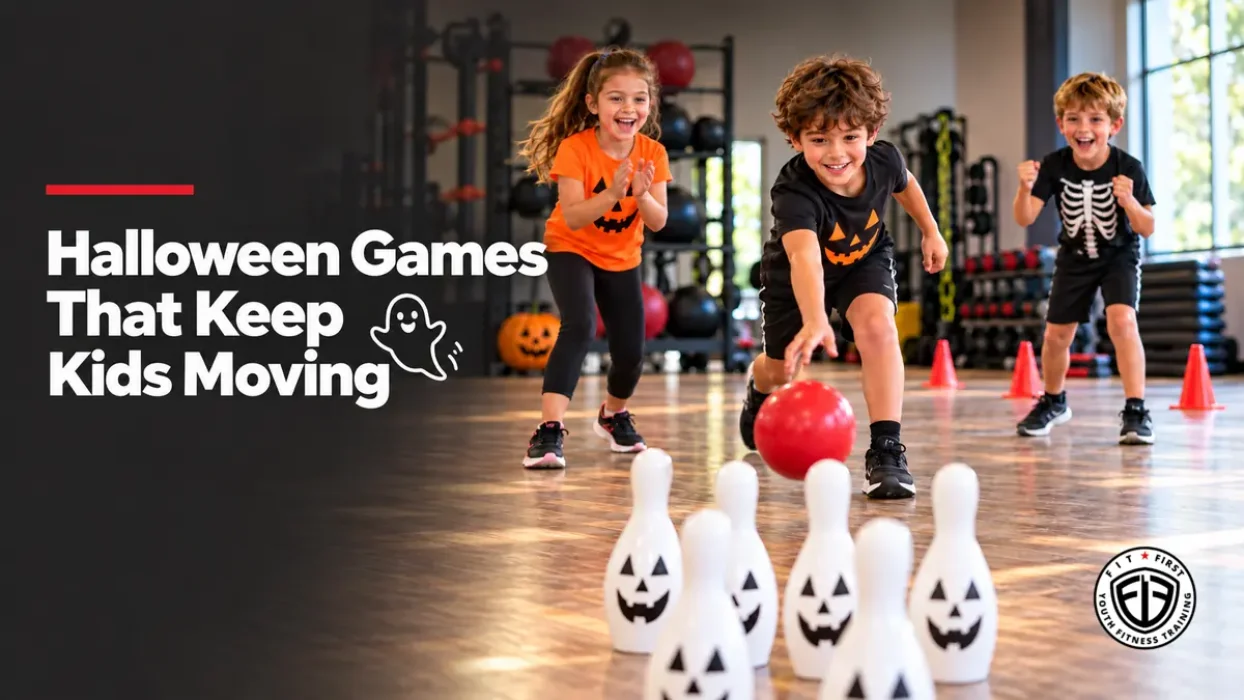
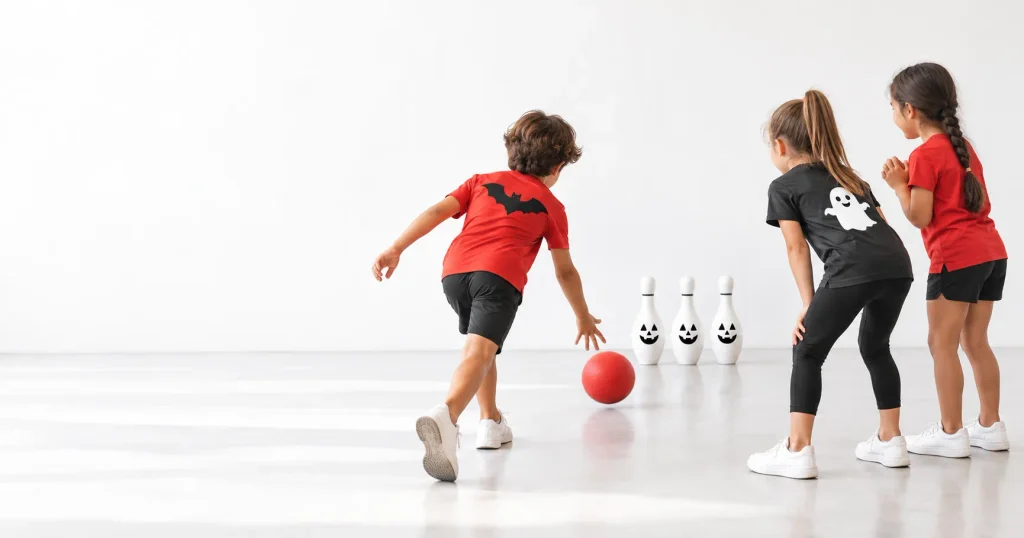
2. Pumpkin Bowling
Roll a soft orange ball toward empty plastic bottles decorated with pumpkin faces. Place the bottles on a clear, level surface.
Children can choose a closer starting line. Reset together and aim for a shared group total rather than individual rankings.
3. Spiderweb Path
Make a simple web-shaped route with securely attached floor tape. Invite children to follow the lines slowly, choosing different paths.
Keep it flat and away from furniture. Offer a wider route, and skip balancing challenges when ordinary walking is enough.
4. Witch’s Cauldron Toss
Place a wide bucket on the ground and toss soft beanbags into it. Mark two or three throwing positions so children can choose their distance.
Call each beanbag a pretend potion ingredient. Keep the landing area clear while someone throws.
5. Ghost Delivery Relay
Carry a soft white ball to a basket, return, and hand the next child a turn marker. Set up short, separate lanes.
Use walking rather than racing in small spaces. Give the group a shared delivery goal so everyone’s contribution counts.
6. Build a Skeleton Hunt
Hide large paper skeleton pieces around a clearly bounded area. Children collect them and work together to assemble a friendly skeleton on a wall.
Use picture clues for younger players. Place pieces at accessible heights and avoid climbing or reaching behind furniture.
7. Pumpkin Soccer Trail
Dribble a soft orange ball around widely spaced cones and finish at a marked goal. Let children practice without a timer.
Simplify the route when needed. Offer a rolling version or another suitable way to move the ball through the course.
For families exploring a coaching celebration, Fit First’s fitness birthday parties include options built around movement games, obstacle activities, and sports stations in Orange County. Explore the party formats to see what fits your child’s interests.
Halloween Classroom Games
Classroom games should keep movement contained and instructions easy to follow.
8. Spooky Simon Says
Give familiar directions with a Halloween twist: “Simon says stretch like a tall scarecrow” or “Simon says flap your bat wings.”
Children who miss a cue keep playing. Ask a student volunteer to lead a few directions when ready.
9. Monster Mirror Partners
Pair children and let one slowly demonstrate monster movements while the other copies. Switch leaders after a short round.
Encourage gentle reaches, shoulder movements, and marching. Partners can remain seated, and nobody needs to touch or maintain eye contact.
10. Pumpkin Pattern Steps
Show a short movement sequence, such as step, clap, reach. Children repeat it, then help add another action.
Use picture cards alongside instructions. Start with two movements for younger children and allow everyone to practice before extending the sequence.
11. Halloween Picture Corners
Place friendly Halloween pictures at different points around the room. Give a clue, such as “Find something that flies,” and invite children to walk toward an answer.
Discuss their choices without removing players. Use pointing instead when movement space is limited.
12. Spider Leg Counting
Hold up a number card and choose a movement to repeat that many times. Children might complete four arm circles or six gentle steps.
Let students suggest movements. Keep the numbers manageable and provide a seated option for each action.
13. Ghost Tower Builders
Put lightweight cups at a nearby collection spot. Children take turns walking over, bringing one back, and adding it to a group tower.
Keep the route clear. If the tower falls, invite the group to change its design and rebuild.
14. Halloween Movement Charades
Act out friendly characters or seasonal actions, such as a stretching cat or a scarecrow waving. Other children guess, then try the movement.
Allow partner performances and picture prompts. Avoid frightening scenes, and let children pass on being the performer.
For schools planning a larger activity day, Fit First’s Field Day program includes rotating stations, cooperative games, relays, and sports activities. Explore the format if your school wants help organizing group movement.
Indoor Halloween Games for Family Nights
Family games can work with two or three players and a small clear area.
15. Pumpkin Spoon Walk
Carry a soft orange pom-pom on a large spoon along a short route. Place it in a bowl at the finish.
Choose materials appropriate for the child’s age. Make the route easier or use a small scoop instead of a spoon.
16. Friendly Monster Story Walk
Tell an adventure and invite everyone to act it out. March toward a castle, reach for imaginary stars, and tiptoe past a sleeping dragon.
Let children add ideas. Keep the story friendly and move within each person’s comfortable range.
17. Broomstick Step-Over
Lay a foam pool noodle flat on the floor and pretend it is a parked broomstick. Take turns stepping over it and walking around it.
Keep it at floor level. Provide an unobstructed route around it for anyone who prefers that option.
18. Skeleton Stretch Cards
Draw cards showing simple movements, such as reaching upward or opening arms wide. Take turns selecting a card for everyone to copy.
Use gentle movements without forcing a stretch. Children can invent a comfortable version or choose another card.
19. Keep the Ghost Floating
Use a lightweight beach ball as your pretend ghost. Work together to keep it moving with gentle taps in a clear space.
Try seated play or bounce-and-catch turns. Stop and reset when the ball reaches furniture or leaves the activity area.
20. Roll a Halloween Movement
Assign six actions to the numbers on a large die. Roll, then perform the matching action together: march, reach, clap, turn, wave, or pose.
Choose movements everyone can attempt. Let children change the actions to create another round.
Build a Simple Halloween Game Plan
Pick three contrasting games rather than several activities with the same rules.
For example, start with Monster Freeze Dance, move to Cauldron Toss, and finish with Skeleton Stretch Cards. For a classroom, combine Simon Says, Ghost Tower Builders, and Movement Charades.
Gather supplies in separate containers and demonstrate one activity at a time. Change games while children are still interested, and leave room for requests to repeat a favorite.
Make the Games Welcoming
Offer choices in movement, communication, and pace so children can participate comfortably.
Use visual demonstrations, quieter music, shorter routes, and seated alternatives. Explain what happens next, avoid surprise scares, and provide a place to take a break.
If fear or distress persists beyond the celebration or regularly interferes with everyday activities, speak with your child’s pediatrician or a qualified mental health professional.
For help exploring an active celebration or school event, contact Fit First to discuss your group, setting, and activity preferences.
Frequently Asked Questions
What Are Easy Halloween Games for Preschoolers?
Monster Freeze Dance, Pumpkin Bowling, and Friendly Monster Story Walk are simple starting points. Demonstrate one action at a time, use age-appropriate materials, and keep turns brief.
Which Halloween Games Work in a Small Classroom?
Monster Mirror Partners, Spider Leg Counting, and Movement Charades can stay within individual spaces. Choose seated or standing versions and avoid running, chasing, or throwing across the room.
How Many Games Should I Plan for a Halloween Party?
Start with three main games and one backup activity. Adjust the pace to the group’s interest, allowing time for explanations, transitions, and breaks rather than trying to fill every minute.
How Can I Keep Halloween Games Fun Without Making Them Scary?
Use friendly characters, familiar movements, and playful names instead of jump scares or frightening stories. Tell children what to expect and allow them to watch, join with a partner, or choose another role.