Does your child start inventing games before the guests have even arrived? Planning their birthday can feel tricky when you want plenty of activity without spending the afternoon managing queues, explaining complicated rules, or settling competitive disagreements.
The most useful outdoor birthday party ideas give children clear ways to play, room to explore, and opportunities to take breaks. A few well-chosen activities can anchor the celebration without filling every minute.
Here are ten ideas, plus practical guidance for choosing a location, adapting games, and organizing a party that feels right for your child.
What Makes an Active Birthday Party Work?
An active birthday party works best when the activities match the child, the guests, and the available space.
Start by asking your child what they want to do with their friends. Their answer might be playing soccer, dancing, completing a pretend mission, or trying several activities.
Then consider the guest list. A group of enthusiastic sports players may enjoy short matches, while children with varied interests might prefer stations they can explore.
Plan a welcoming first activity, a main game, and a quieter option. Keep instructions brief and make the next step obvious.
Active Birthday Party Ideas to Try Outdoors
Choose one main idea and add a complementary activity rather than trying to build an entire festival.
1. Backyard Mini Obstacle Course
Create a simple route using cones, flat floor markers, and soft objects. Children can weave between markers, step across designated spots, and finish with a beanbag toss.
Demonstrate the route first and let guests practice without timing. Offer an unobstructed alternative path, and avoid improvised climbing structures or obstacles that require jumping from heights.
2. Sports Mash-Up Stations
Set up two or three sports activities so guests can sample different skills. Try soccer dribbling, soft-ball target throws, and a basketball station where suitable equipment is available.
Keep groups small and rotate when children are ready. Use nearby targets and simple instructions for beginners, with optional challenges for guests who want more practice.
3. Soccer Mission Party
Turn soccer skills into a sequence of playful missions. Children might dribble around cones, pass to a partner, and aim between two goal markers.
Finish with a short game if the group wants one. Rotate roles and avoid selecting permanent captains who choose teams, which can leave some guests waiting to be picked.
4. Superhero Team Challenge
Build a cooperative adventure around a shared task, such as delivering soft “rescue supplies” to a base.
Guests can carry beanbags, navigate a marked route, and assemble a final picture together. Give each child a useful role and keep the story light. The group succeeds by completing the mission together.
5. Outdoor Explorer Hunt
Create a picture checklist of things children can spot, such as a leaf, a bird, or something shaped like a circle.
Set clear boundaries and assign adults to supervise groups. Encourage observation rather than collecting plants or disturbing wildlife. Add a movement clue between stops, such as walking like a bear or stretching toward the sky.
For families considering guided sports activities, Fit First’s Sports & Agility Party is listed for ages 6–12 and includes sports-skill games and agility stations. Explore its birthday party options to compare formats with your child’s interests.
6. Dance and Freeze Celebration
Make a short playlist with your child and invite guests to dance in a clear, bounded space. Pause the music for a silly frozen pose, then restart without eliminating anyone.
Offer seated movements and keep the volume comfortable. Children can suggest the next move or lead briefly with a friend.
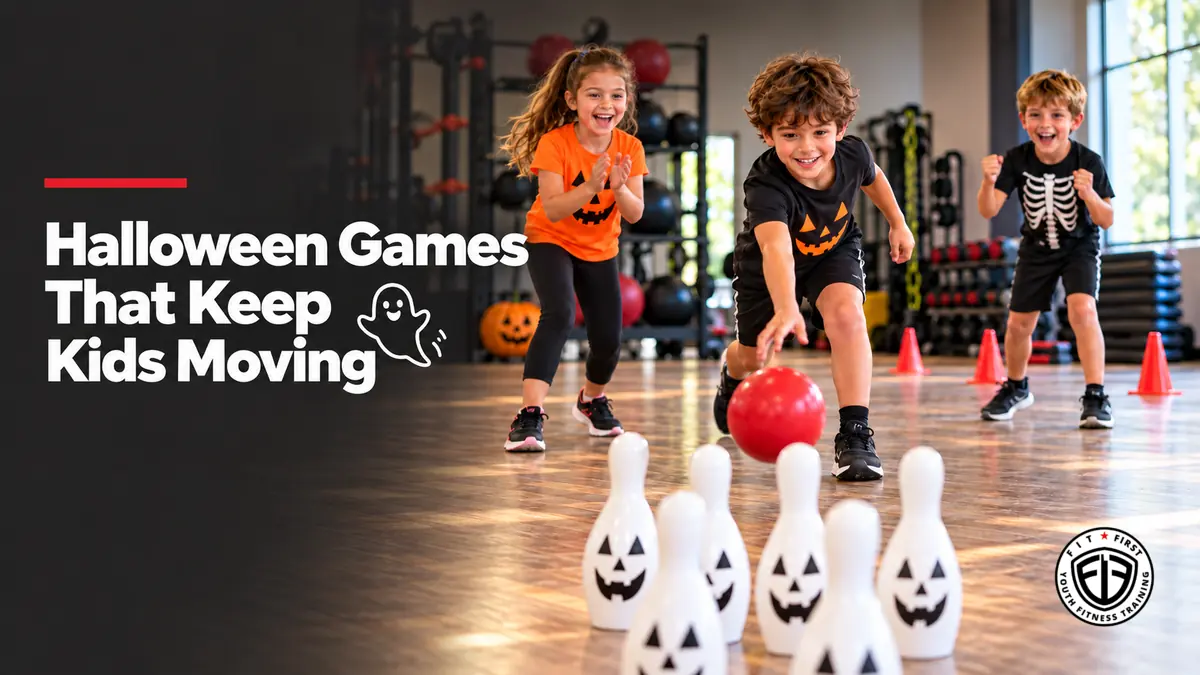
7. Backyard Bowling and Target Games
Use a soft ball and lightweight plastic pins or bottles for a bowling station. Add a nearby beanbag target so guests have another activity while waiting.
Let children choose their starting distance. Keep throwing and rolling lanes separate, and make resetting the equipment part of the game.
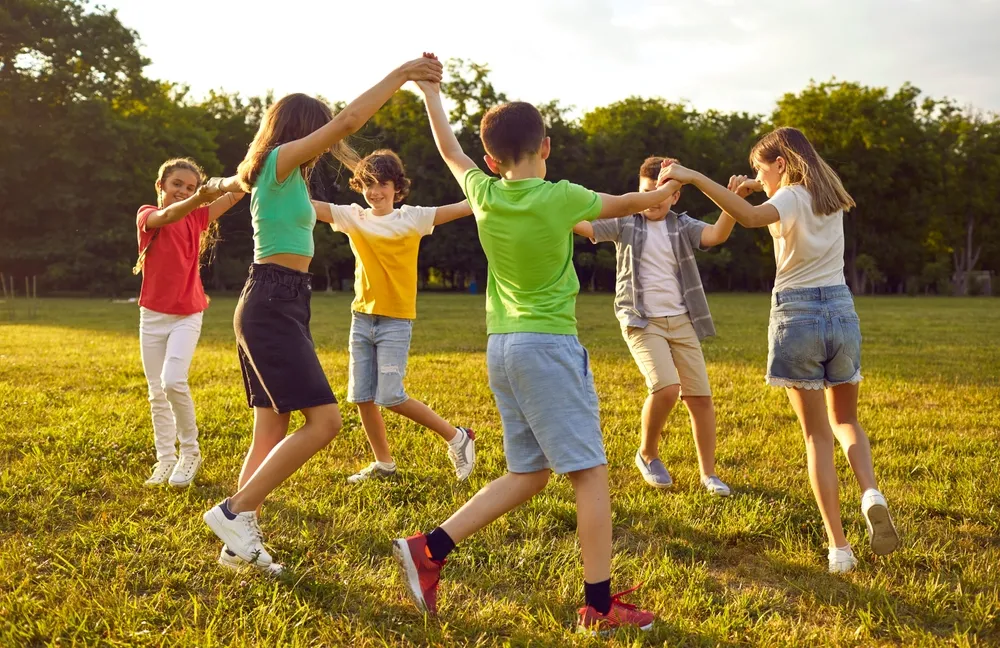
8. Parachute Circle Games
Use a purpose-made play parachute with adult guidance for simple group activities. Guests can create gentle waves or work together to move a lightweight ball across the fabric.
Demonstrate how to hold and release it. Keep the fabric away from faces and necks, and provide another role for children who prefer not to hold an edge.
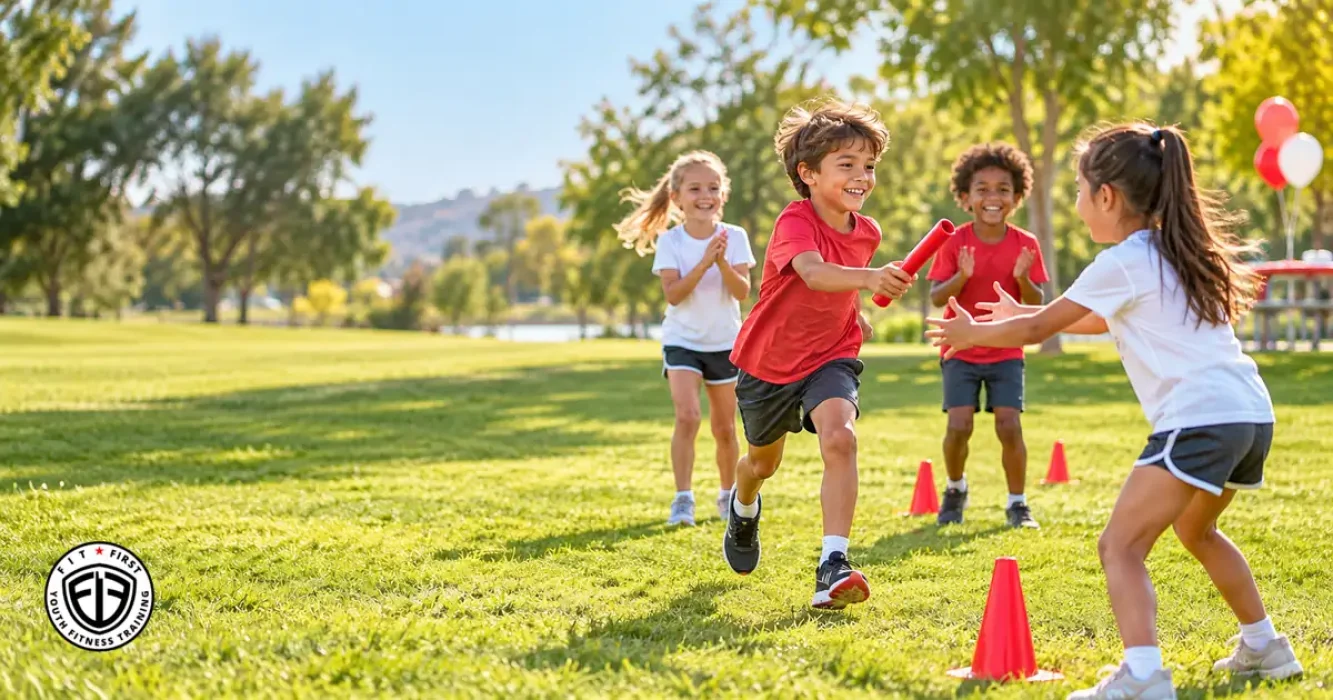
9. Junior Field Day
Combine a few short activities, such as cone weaving, beanbag delivery, and partner ball rolling. Mark separate stations and explain where each begins and ends.
Choose cooperative goals or friendly rounds based on the group’s preferences. Avoid elimination games that leave children sitting out for much of the party.
10. Movement and Picnic Party
Pair gentle movement games with a relaxed outdoor picnic. Start with animal-inspired reaches, a follow-the-leader walk, or simple poses children can adapt.
Then gather for food and conversation. This format suits families who want active play with a calmer pace, especially when guests enjoy different levels of activity.
Choose Between Backyard and Park Birthday Party Ideas
Choose the location that supports your activities and makes supervision straightforward.
A backyard offers a familiar setting and nearby facilities. A park may provide more room, but visit beforehand to check the surface, shade, bathrooms, access routes, and distance from parking.
Ask the venue about reservations, outside activity providers, music, equipment, and cleanup requirements. Rules vary, so confirm them directly before booking entertainment or promising a particular setup.
Plan Birthday Party Games Around Your Guests
Adapt the challenge to the children attending, rather than using age as the only guide.
For younger guests, choose one-step directions and quick turns. Older children may enjoy helping design a course or agreeing on team rules.
Ask caregivers privately about anything that could make participation easier. Useful adjustments include:
- Wider routes and closer targets.
- Visual demonstrations alongside spoken instructions.
- Seated or standing versions of movements.
- A quieter space for breaks.
- Partner participation instead of performing alone.
If you are unsure about an activity because of a child’s health needs or restrictions, ask their pediatrician or care team before the party.
Keep the Party Schedule Simple
Use a loose sequence that gives the celebration direction while leaving room to adjust.
A practical order is:
- Arrival: Offer an easy activity children can join immediately.
- Welcome: Explain boundaries and demonstrate the main game.
- Active Play: Run the chosen activity or rotate stations.
- Break: Gather for water, food, and a rest.
- Final Game: Repeat a favorite or choose something gentler.
- Birthday Moment: Bring everyone together for cake and goodbyes.
Prepare supplies before guests arrive. Give each supervising adult a clear role so someone can help a child without leaving the rest of the group unattended.
Prepare for Weather and Outdoor Conditions
Have a usable backup plan before sending invitations.
Check the forecast and decide how you will communicate a location change or postponement. Rain, excessive heat, or unsuitable conditions may require changing the activity plan altogether.
Provide accessible water and shaded breaks. The American Academy of Pediatrics recommends monitoring conditions, encouraging hydration, and adjusting or limiting outdoor activity when heat creates a risk.
Choose games that can be simplified indoors, such as charades, gentle movement, or soft target activities. A backup space still needs appropriate supervision and clear activity boundaries.
Keep the Setup Manageable
Spend your planning effort on activities, supervision, and practical supplies before adding elaborate decorations.
Reuse cones, soft balls, baskets, and other suitable equipment where possible. Borrowing items can help, but check their condition and suitability first.
Choose decorations that stay clear of play routes. Assign one place for supplies and another for food, then prepare a cleanup container so transitions do not leave equipment scattered across the space.
Decide Whether You Want Help Hosting
Choose guided activities when you would rather have someone else lead the games and manage their flow.
Fit First’s Custom Fitness Birthday Party allows families to discuss themes, sports stations, difficulty, pacing, and activity preferences. Its website describes mobile parties at locations including parks and backyards across Orange County.
Before booking any provider, discuss the venue, guest list, support needs, weather arrangements, and what is included.
To explore a suitable format, contact Fit First with your child’s favorite activities and your proposed location.
Frequently Asked Questions
What Are Good Outdoor Birthday Party Ideas for Younger Kids?
Simple obstacle routes, dance games, soft-ball bowling, and picture-based explorer hunts are useful starting points. Demonstrate one task at a time and keep turns short so children can participate without learning complicated rules.
How Much Space Do I Need for an Active Birthday Party?
The space must allow your chosen activities, clear boundaries, and adult supervision. A small backyard can support target games and movement stations, while running games need more room and separation from other activities.
How Do I Include Children Who Do Not Like Competitive Sports?
Offer cooperative challenges, dance, exploration, and different roles within the games. Let guests choose manageable versions of tasks and avoid making winning the condition for continued participation.
What Should I Do If Bad Weather Is Forecast?
Use the backup plan you agreed on before the party, whether that means relocating, changing activities, or postponing. Tell guests early and confirm arrangements with the venue and any activity provider.