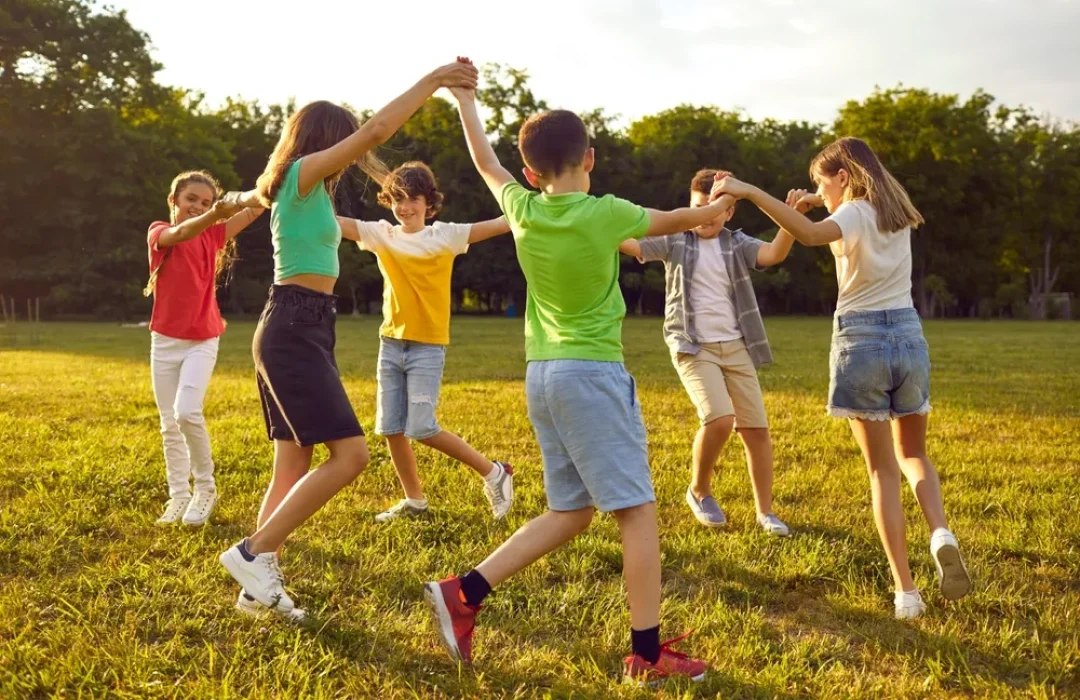
Kids dancing can support healthy growth by giving children an enjoyable way to practice balance, coordination, strength, rhythm, memory, self-expression, and cooperation. Dance does not make a child taller or change the height determined largely by genetics. Instead, it supports the physical, cognitive, social, and emotional skills children develop as they grow.
For Southern California parents, that distinction matters. The right dance class is not simply another activity to fit into the family calendar. It can become a consistent form of movement that children enjoy enough to continue—especially when the class matches their age, interests, comfort level, and abilities.
This guide explains what dance can realistically do for children, how much physical activity kids need, and what SoCal families should consider when choosing a dance program.
What Does “Growth” Mean When We Talk About Kids Dancing?
Healthy growth involves more than height. It includes how children learn to control their bodies, respond to instructions, express ideas, handle new challenges, and participate with others.
The National Library of Medicine explains that height is influenced largely by inherited genetic variations, along with environmental factors such as nutrition and overall health. Dance cannot add inches beyond a child’s natural growth pattern. Parents concerned about their child’s height or growth rate should speak with a pediatrician instead of relying on an activity program to change it. Parents can read the MedlinePlus explanation of height and genetics for more information.
What dance can do is create repeated, age-appropriate opportunities to move, learn, and connect. A systematic review available through the National Institutes of Health found that dance interventions may benefit several areas of physical fitness and psychological health in children and adolescents, although results vary by program and the quality of the available research. The complete study is available through PubMed Central.
1. Dance Builds Coordination and Body Awareness
Children need practice to understand where their bodies are in space and how different movements connect. Dance turns that practice into an active sequence: step forward, shift weight, reach, turn, stop, and begin again.
Over time, kids dancing in a well-structured class may improve skills such as:
- Balance and postural control
- Bilateral coordination, or using both sides of the body together
- Timing and rhythm
- Directional awareness
- Gross-motor control
- Movement sequencing
These skills are useful beyond dance. They can help children feel more comfortable during playground activities, physical education, recreational sports, and everyday movement.
At Fit First, the kids dance program in Orange County combines guided movement, music, routines, group activities, and freestyle time to help children develop coordination and confidence in a supportive setting.
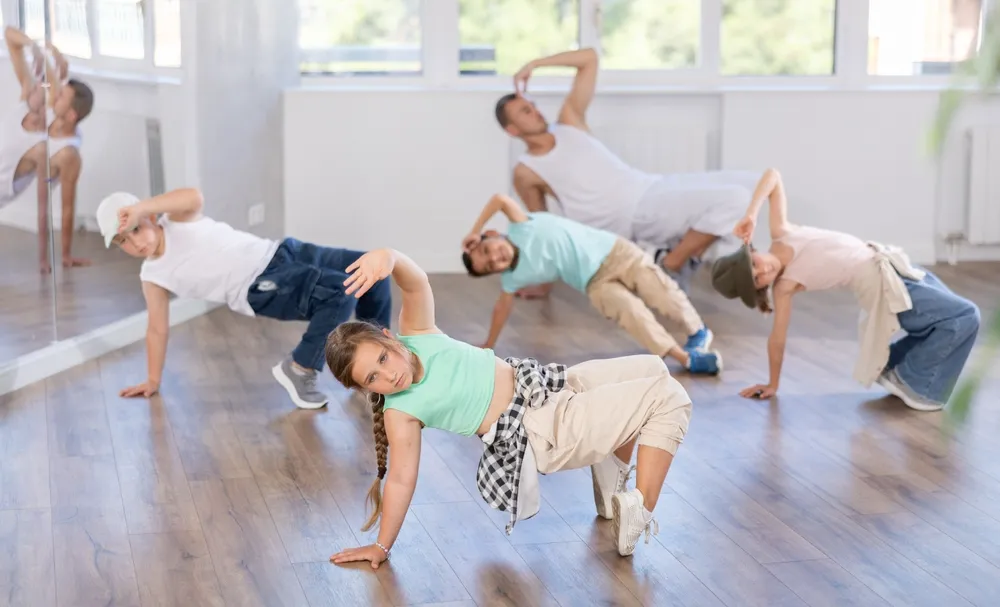
2. Dance Can Contribute to Daily Physical Activity
Dance can range from light movement to moderate or vigorous aerobic activity, depending on the style, pace, and structure of the class. Active routines raise the heart rate, challenge endurance, and use muscle groups throughout the body.
The California Department of Public Health recommends at least 60 minutes of physical activity per day for children and adolescents ages 6 through 17. Preschool-aged children should remain active throughout the day.
A dance class can contribute to that total, but one weekly class should not be treated as a child’s only form of movement.
For many families, the advantage of dance is consistency. A child who does not enjoy competitive sports may still look forward to learning a routine, moving to favorite music, or creating new steps. Enjoyment makes it easier for physical activity to become a habit instead of a chore.
3. Repeated Movement Supports Muscles and Bones
Many dance activities require children to support their body weight while stepping, bending, hopping, turning, or jumping. These movements engage the legs, hips, core, and smaller stabilizing muscles.
Age-appropriate weight-bearing activity is one part of a healthy childhood movement routine. It can support muscular strength, balance, and bone health when taught with safe technique and reasonable progression.
The goal for children is not intense adult-style training. It is frequent, varied movement suited to their developmental stage.
A responsible dance class should include a gradual warm-up, clear instruction, appropriate rest, and a cool-down. Children should be encouraged to work at their current level rather than being pressured to force flexibility, jumps, or difficult movements before they are ready.
4. Learning Dance Routines Exercises Attention and Memory
Dance is physical, but it also asks children to process information. They listen for cues, remember an order of movements, match steps to music, adjust their position, and respond when a sequence changes.
That combination gives children practical experience with:
- Following multi-step directions
- Sustaining attention for short periods
- Recognizing patterns
- Remembering sequences
- Switching between movements
- Using spatial awareness
These are valuable learning behaviors, but parents should be cautious of programs that promise higher grades or dramatic cognitive results. Dance can support attention and practice, but it is not an academic treatment, and every child responds differently.
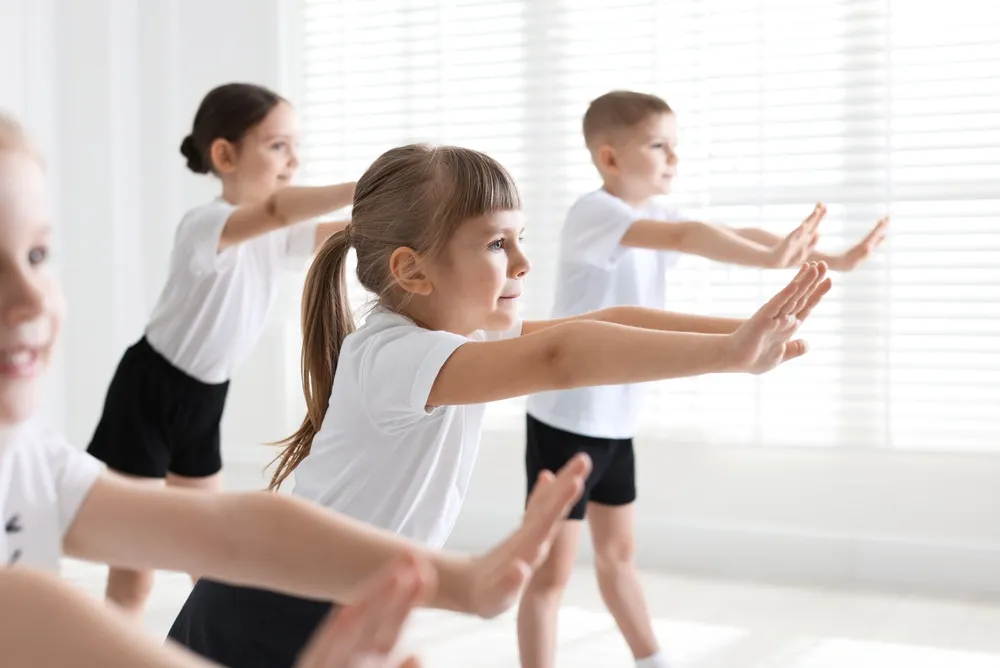
5. Creative Movement Supports Self-Expression
Not every child can easily explain excitement, frustration, nervousness, or pride in words. Music and movement offer another form of expression.
Freestyle activities and creative prompts allow children to make choices within a safe structure. A child might decide how to move like an animal, respond to a change in tempo, or create a short sequence.
These small choices can help children become more comfortable sharing ideas and trying something unfamiliar.
The strongest confidence-building environment is not one that demands perfect performance. It is one where effort is recognized, mistakes are treated as part of learning, and progress is measured against the child’s own starting point.
6. Group Dance Can Help Children Practice Social Skills
Group routines give children a shared task. They learn to take turns, notice personal space, watch for cues, cooperate with a partner, and move as part of a group.
This can be especially appealing to children who want a social activity but do not enjoy the pressure of keeping score.
A supportive dance class can help a hesitant child participate in manageable stages: first watching, then copying one movement, and eventually joining a short routine.
Dance does not automatically make every child outgoing. What it can provide is repeated exposure to a familiar group, instructor, and routine. That predictability may help some children feel safer participating over time.
What Kind of Dance Program Fits Your Child?
The best program is not necessarily the most advanced one. It is the class your child can join safely, understand, and want to attend again.
| Your child’s needs | What to look for | Fit First option |
| Ages 6–15; beginner through intermediate | Guided choreography, rhythm, creative movement, teamwork, and freestyle opportunities | Kids Dance Classes |
| Ages 4–13; enjoys music-led movement | Age-appropriate songs, playful movement, rhythm, balance, and sensory engagement | Music and Wiggles |
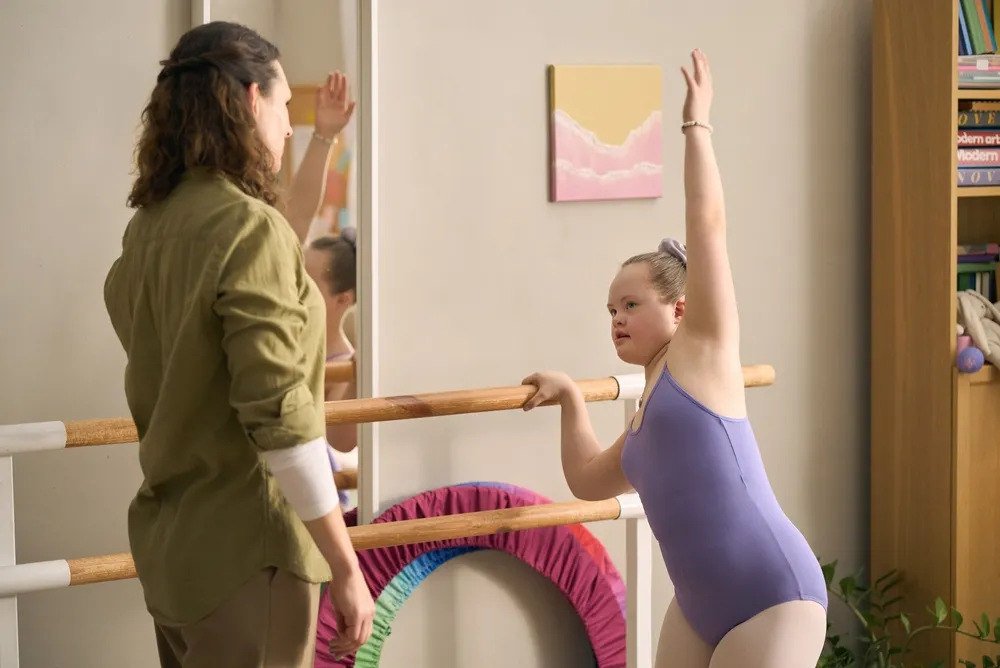
| Ages 4–7; benefits from adaptive instruction | Flexible pacing, personalized support, an inclusive environment, and activities matched to individual abilities | Special Needs Adaptive Dance |
Schedules and locations can change, so families should confirm the current age group, location, class format, and availability before registering.
Fit First serves families through parks and partner locations in Orange County. Parents can use the Fit First contact page for help finding the closest suitable option.
A SoCal Parent’s Checklist for Choosing a Kids Dance Class
Southern California families often balance school schedules, traffic, heat, and activities across several cities. Before committing to a session package, ask practical questions that affect whether your child can participate safely and consistently.
Is the Class Appropriate for My Child’s Age and Skill Level?
A beginner should not need previous choreography experience to feel included. Ask how instructors adjust a movement when a child needs additional time, more demonstrations, or a simpler version.
The class should provide an appropriate challenge without placing children in situations that feel unsafe or discouraging.
Who Teaches the Class?
Look for instructors with relevant dance or youth-coaching experience and a teaching style suited to children. Parents can review the Fit First coaching team and ask which coach is currently leading the class.
A skilled instructor should be able to demonstrate movements clearly, maintain a positive class environment, and adjust activities for different experience levels.
How Does the Instructor Respond When a Child Feels Nervous?
Some children join immediately, while others need time to observe. Ask whether the instructor uses demonstrations, visual cues, smaller steps, or positive redirection instead of pressure.
Children should not be embarrassed for making mistakes, needing a break, or taking longer to participate.
Where Is the Class Held?
Fit First uses Orange County parks and partner facilities, and location availability varies by program. For an outdoor class, ask about shade, water breaks, surface conditions, restroom access, and extreme-heat policies.
California public-health guidance notes that strenuous activity can increase the risk of heat-related illness, particularly during extreme heat. Parents should check weather conditions, send water, choose light clothing, and follow the program’s cancellation or modification policy.
Families can review California’s guidance for sports and strenuous activities during extreme heat.
Can the Program Support My Child’s Individual Needs?
Tell the program about relevant medical conditions, sensory needs, injuries, mobility considerations, or developmental differences before the first class. Ask what adaptations are available rather than assuming a standard class will be the right fit.
For children who benefit from individualized support, families may also consider one-on-one youth training or ask whether an adaptive dance class is currently available.
How Can Parents Tell Whether Dance Is Helping?
Healthy progress is not limited to performing in a recital or completing a technically perfect routine. Over several weeks, parents may notice practical changes such as:
- Remembering more of a movement sequence
- Recovering balance more easily
- Joining the group with less hesitation
- Asking to practice a favorite step at home
- Following cues with fewer reminders
- Showing greater comfort with rhythm or personal space
- Describing the class positively and wanting to return
Progress will not look the same for every child.
A meaningful achievement for one dancer may be performing a complete sequence. For another, it may be entering the class, staying for the full session, or trying one new movement.
How Often Should Kids Dance?
There is no single schedule that fits every family. One or two structured classes per week can be a reasonable starting point when combined with active play and other movement during the week.
The appropriate frequency depends on the child’s age, energy level, interest, other activities, and the intensity of the class.
Parents should also avoid overscheduling. Persistent pain, unusual fatigue, irritability, or a sudden loss of interest can indicate that a child needs rest, a different class level, or a conversation with a healthcare professional.
Dance should challenge children appropriately without making movement feel like punishment.
Help Your Child Find a Movement Style They Enjoy
Kids dancing is most valuable when it becomes a positive and sustainable part of childhood. The goal is not to turn every child into a performer. It is to give children a place to move, learn, create, and build skills at a pace that feels achievable.
Fit First offers beginner-friendly and inclusive movement programs for families in Orange County.
Explore the Fit First kids dance program to review the class structure and age range, or contact Fit First for help choosing the right program, coach, and current location for your child.
Frequently Asked Questions About Kids Dancing
Can Dancing Make a Child Taller?
No activity can guarantee additional height. Height is determined largely by genetics, along with factors such as nutrition, hormones, health, and access to care.
Dance can support fitness, strength, coordination, posture, and healthy movement as a child grows, but it should not be presented as a height-increasing activity.
What Is a Good Age for a Child to Start Dancing?
Children can begin with music-and-movement activities during the preschool years.
A suitable starting age depends on the program and the child’s readiness to follow simple directions, participate safely, and spend time in a group. Fit First’s program pages list different age ranges, so parents should choose the class that matches their child rather than selecting by dance style alone.
Does Dance Count Toward the Recommended 60 Minutes of Daily Activity?
An active dance class can contribute to the daily physical-activity total recommended for children ages 6 through 17.
The exact amount depends on how long and how actively the child moves during class. Children still need other forms of active play and movement throughout the week.
Is Dance a Good Activity for a Shy Child?
It can be. Predictable routines, music, and shared movement may feel less intimidating than highly competitive activities.
A patient instructor should allow a hesitant child to observe, learn in small steps, and join the group without being singled out.
Can Children With Disabilities Participate in Dance?
Many children with disabilities can participate when instruction, pacing, cues, and movements are adapted to their abilities.
Parents should discuss their child’s needs with the provider before registering and ask what support the instructor can realistically offer. Fit First provides a dedicated adaptive dance option for younger children with special needs, subject to current scheduling and availability.